Mount Everest
Earth's highest mountain
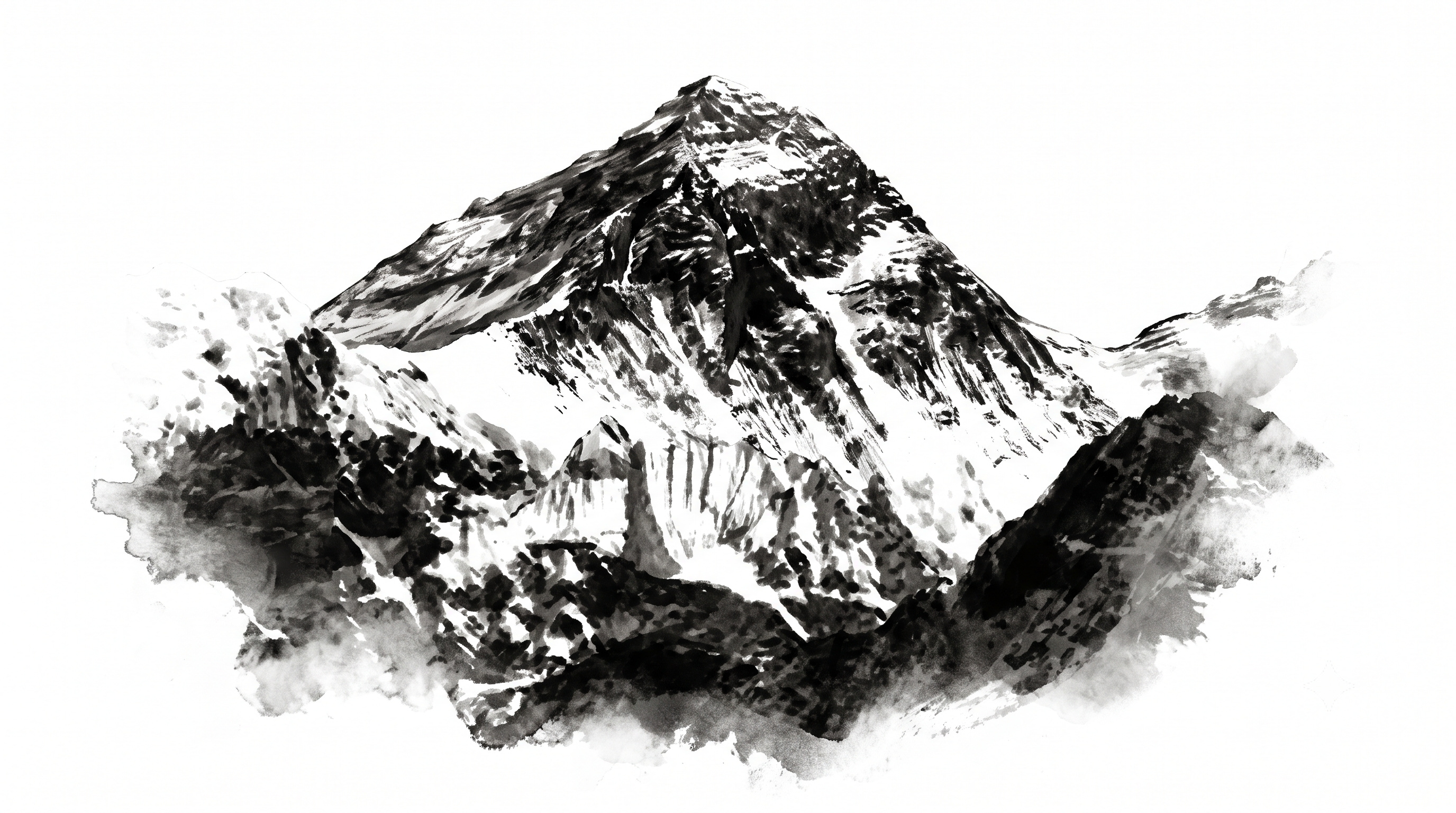
Mount Everest is the highest mountain on Earth above sea level. It lies in the Mahalangur Himal sub-range of the Himalayas and marks part of the China–Nepal border at its summit. Its height was most recently measured in 2020 through a joint survey by Nepalese and Chinese authorities as 8,848.86 m.
While widely known for commercial mountaineering, Everest's extreme high-altitude biome, meteorological anomalies, and rich indigenous history make it a fascinating subject for geological and atmospheric research.
Flora & Fauna
Despite the extreme hypoxic and sub-zero conditions, Everest supports a highly specialized, albeit sparse, ecosystem.
The Everest Jumping Spider (Euophrys omnisuperstes): This species is one of the highest permanent animal residents on Earth. Discovered at elevations up to 6,700 meters (22,000 ft), these microscopic predators survive in rocky crevices. Their food source? Stray springtails and small flies that are blown up the mountain by severe thermal winds.
Avian Migration: Bar-headed geese are frequently observed flying directly over the Everest massif during migration, possessing uniquely adapted hemoglobin that allows them to sustain flight in an atmosphere with less than a third of sea-level oxygen. High-altitude scavengers, like the yellow-billed chough, have been spotted as high as 7,900 meters (26,000 ft).
Extreme Flora: Plant life is largely restricted to the mountain's lower extremes. However, a specialized species of moss was discovered growing at 6,480 meters (21,260 ft)—widely considered the highest known plant species on Earth.
Climate & Meteorology
Everest's climate is dominated by the migration of the Northern Hemisphere jet stream. For most of the year, the peak is battered by hurricane-force winds (often exceeding 285 km/h or 177 mph) as the jet stream sits directly over the summit. Temperatures can plummet to −60 °C (−76 °F).
In May, and again briefly in autumn, the jet stream shifts northward, creating temporary "weather windows" of relative calm. Atmospheric pressure at the summit is roughly 33% of that at sea level. This low pressure means water boils at just 71 °C (160 °F) at the summit, and defines the region above 8,000 meters as the "death zone," where human acclimatization is biologically impossible.
Mythology & Naming
The mountain is deeply sacred to indigenous populations and local religions.
Chomolungma: The Tibetan name, translating roughly to "Holy Mother." Tibetan Buddhism reveres the mountain as the domain of Miyolangsangma, a "Goddess of Inexhaustible Giving" who is traditionally depicted riding a golden tiger. Local Sherpa communities routinely perform a Puja ceremony to appease her before setting foot on the mountain.
Sagarmāthā: The Nepali and Sanskrit name, translating loosely to "Head in the Great Blue Sky" (from sagar meaning "sky" and māthā meaning "head").
Western Naming: The peak was designated "Peak XV" by the British Great Trigonometrical Survey before being renamed in 1865 after Sir George Everest, the former Surveyor General of India. Interestingly, Everest himself opposed the honor, arguing that the name could not be easily pronounced by local residents or written in Hindi.
Notable Happenings & Aviation
The First Flight (1933): Funded by eccentric British millionaire Lady Houston, a pair of Westland Wallace biplanes successfully flew over the summit for the first time. The pilots had to battle severe atmospheric downdrafts that nearly crashed their open-cockpit planes into the mountainside.
The Summit Helicopter Landing (2005): French test pilot Didier Delsalle set a monumental aviation record by landing a Eurocopter AS350 B3 on the exact summit of Everest. To satisfy the Fédération Aéronautique Internationale (FAI), he had to maintain contact with the summit for at least two minutes (he stayed for 3 minutes and 50 seconds) before descending, proving a rotorcraft could operate in the world's thinnest air.
Paragliding the Peak (1988): French alpinist and extreme athlete Jean-Marc Boivin became the first person to paraglide from the summit, reaching the base in just 11 minutes—a descent that typically takes days on foot.